External studyRandomised trial, 2024
A digital human or a text chat for questions on mental health?
For her PhD, Almira and her colleagues built a chatbot that answers questions on mental health, and tested two versions of it with volunteers: a talking digital human and a text chat. Here is what they found, and where the evidence ends.
- healthy volunteers took part
- 45healthy volunteers took part
- out of 100 for ease of use with the text chat (65 with the digital human)
- 75out of 100 for ease of use with the text chat (65 with the digital human)
- mental health topics the chatbot answers
- 24mental health topics the chatbot answers
What the study asked
Chatbots that answer questions on mental health are spreading fast. Is it easier to talk to one that looks and speaks like a person, a digital human, or to one you simply type to? And do people react differently to the two, in their body and their feelings?
How it was done
The chatbot, called BETSY, was designed together with psychiatrists, psychiatric nurses, psychologists, a person with experience of using mental health care, and an engineer. It answers questions in Swedish on 24 mental health topics, using prepared answers rather than AI that writes its own replies. In 2021, healthy volunteers in Gothenburg were randomly given one version for up to 30 minutes. Afterwards they rated how easy it was to use on a standard scale from 0 to 100 and answered questions about how they felt, and their brain activity, blood pressure and pulse were measured.
45 healthy volunteers
randomly given one version
Digital human
25 people, a talking avatar with facial expressions
Text chat
20 people, typed questions and answers
What the research found
The text chat was rated easier to use: 75 out of 100 on average, against 65 for the digital human. Both scores are average or above for this scale.
About a quarter of those who used the digital human (6 of the 23 who answered) said they felt nervous at least sometimes. None of those who used the text chat did.
Blood pressure, pulse, anxiety scores and well-being did not differ between the two groups. Of the brain activity measures, only one (alpha waves) did.
Women were more often annoyed by the chatbot than men, with both versions.
What it can mean for you
How a digital helper looks and sounds matters for how it feels to use, and a human-like face is not always easier. If you try a chatbot with questions about how you feel, choose the way of talking that suits you, and remember that a chatbot does not replace a person in your care.
Where the evidence ends
The volunteers were healthy, so people who are struggling may experience the chatbot differently. The groups were small, the brain activity data were of limited quality, and the conversations themselves were not analysed. The chatbot used prepared answers: AI that writes its own replies, and more lifelike digital humans, were not available when it was built. The paper does not report a trial registration.
About the researcher
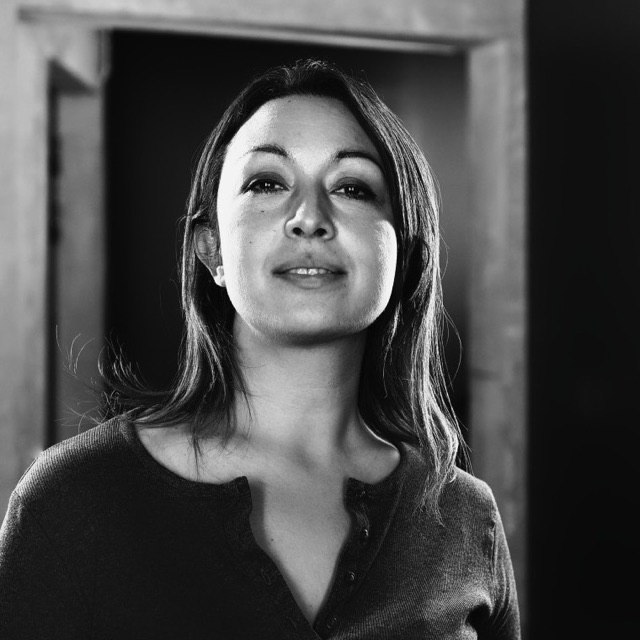
- Name
- Almira Osmanovic Thunström
- Role
- AI strategist, PhD
- Affiliation
- Chalmers Industriteknik
- Field
- Virtual reality and AI as digital tools for mental health care
How this connects to Omaia
Almira’s published studies were not about Omaia, and their results say nothing about Omaia’s effect. We share them because they show what is known about how people take to digital support for their mental health.
- Omaia did not fund, design or run these studies.
- Almira owns the findings and approves how we describe them.
Source and citation
JMIR Human Factors, 29 April 2024
Usability Comparison Among Healthy Participants of an Anthropomorphic Digital Human and a Text-Based Chatbot as a Responder to Questions on Mental Health: Randomized Controlled Trial
Almira Osmanovic Thunström, Hanne Krage Carlsen, Lilas Ali, Tomas Larson, Andreas Hellström, Steinn Steingrimsson
Thunström AO, Carlsen HK, Ali L, Larson T, Hellström A, Steingrimsson S. Usability Comparison Among Healthy Participants of an Anthropomorphic Digital Human and a Text-Based Chatbot as a Responder to Questions on Mental Health: Randomized Controlled Trial. JMIR Hum Factors 2024;11:e54581. doi:10.2196/54581
- Type of evidence
- Randomised controlled trial with healthy volunteers, single study
- Evidence level
- Emerging
- Open access
- Yes
- Reviewed by researcher
- November 2026
- Language
- English
- PubMed
- Open in PubMed
- Licence
- CC BY 4.0
This page is based on the paper above, published open access under CC BY 4.0. Omaia is a non-medical wellbeing service. It makes no diagnosis, gives no treatment, and does not replace contact with a midwife or doctor. Research to Knowledge is approved by the researchers before publication.